Made by  Bulgaria, posted in English Language, on March 19, 2013 2:43 am
The class is divided into 6 groups. Three of the groups will deal with the morphological signs of the 3 races and the other three groups – with the physiological signs. Each group uses a computer with an Internet connection to find out the signs they are allotted. The teacher specifies the time the students may have. Then each group presents what they have found out.
|
This material rate is 1 of 5 points from 1 votes.
|

 (131)
(131)
|
Made by  Sweden, posted in Mathematics, on March 19, 2013 2:04 am
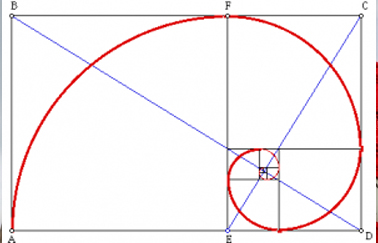
Core content from Curriculum for the Swedish compulsory school 2011 says that it is important to teach students
|
This material rate is 0 of 5 points from 0 votes.
|
|
Made by  Poland, posted in Mathematics, on August 13, 2012 11:58 pm
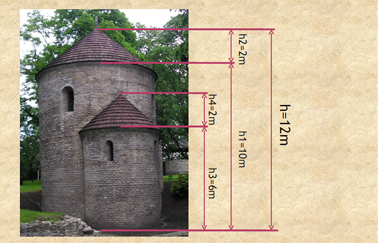
Student:
- is familiar with the concept of polyhedron;
- recognizes and names spatial solids;
- shows practical use of spatial geometry in everyday life;
- finds elements of geometry in different fields, e.g. in chemistry, architecture, nature;
- uses simple calculation to establish the volume area and surface area of geometric models.
|
This material rate is 0.5 of 5 points from 4 votes.
|
(31)
|
Made by Sweden, posted in English Language, on March 19, 2013 1:54 am

The Swedish national curriculum, Lgr 11 says that it is important to teach students how to write texts in different genres. Especially second languages learners need to be aware of the structure and grammar of different texts by explicit instruction.
|
This material rate is 0 of 5 points from 0 votes.
|
|
Made by  Spain, posted in Mathematics, on August 14, 2012 10:10 pm
INSTRUCTIONS ON HOW TO USE IT:
This Excel game is to be used in Math classes as a help-to-understand tool for the students. It
contains several types of functions (y=ax; y=ax2+b; y=a log x +b, etc), one in each sheet. The
user will be able to choose a value for “a” and “b”, and the function will be graphically
represented, always contrasted with the basic function of its type (y=x, y=x2, y=log x, etc), so
that the student has a graphic approach to mathematical analysis.INSTRUCTIONS ON HOW TO USE IT:
This Excel game is to be used in Math classes as a help-to-understand tool for the students. It
contains several types of functions (y=ax; y=ax2+b; y=a log x +b, etc), one in each sheet. The
user will be able to choose a value for “a” and “b”, and the function will be graphically
represented, always contrasted with the basic function of its type (y=x, y=x2, y=log x, etc), so
that the student has a graphic approach to mathematical analysis.
|
This material rate is 0 of 5 points from 0 votes.
|
(124)
|
Made by Poland, posted in English Language, on March 19, 2013 2:15 am
|
This material rate is 0 of 5 points from 0 votes.
|
(256)
|