Made by  Italy, posted in Chemistry, on October 19, 2012 1:10 am

LEARNING OBJECTIVES
? to define a chemical change
? to recognize a chemical change and distinguish it from a physical one
? to read a chemical equation
? to write chemical equations
? to balance chemical equations
? to classify chemical reactions
? to write formation and combustion reactions for given compounds.
? to recognize the limitant reactant
? to make stoichiometric calculations:
from mass to moles, from moles to mass,
yield, masses needed for complete reactions (from a given quantity of a reactant)
|
This material rate is 6 of 5 points from 1 votes.
|

 (30)
(30)
|
Made by  Bulgaria, posted in Chemistry, on May 14, 2012 1:09 am
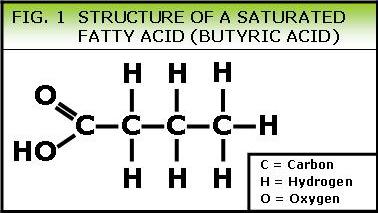
AIMS:
To revise and extend students’ knowledge of butyric carbohydrates
To systemize students’ knowledge of butyric carbohydrates
To put into practice the acquired knowledge of the structure, isomerism and chemical properties of the butyric carbohydrates
To illustrate the connection between the carbohydrates by means of chemical reactions
To develop students’ thinking and imagination by means of different logical operations- synthesis, analysis, comparison, analogy
|
This material rate is 0.1 of 5 points from 12 votes.
|
(33)
|
Made by Italy, posted in Chemistry, on May 12, 2013 9:50 pm
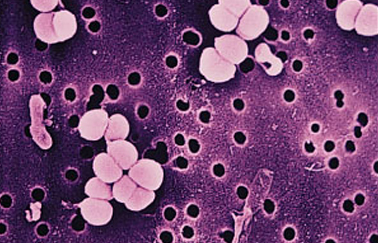
Objective of the activity is to determine the quality of water samples of different sources using chemical and microbiological indirect methods.
The action has planned activities in the laboratory of Chemistry with the determination of the presence of the organic substance, as an indicator of contamination, through the method of Kubel and in the laboratory of Microbiology with the determination of Total Coliforms with MPN method.
|
This material rate is 0 of 5 points from 0 votes.
|
(40)
|
Made by  Turkey, posted in Chemistry, on March 19, 2013 2:39 am

An acidic solution is any aqueous solution which has a pH< 7.0 ([H+] > 1.0 x 10⁻⁷ M).
A basic solution is an aqueous solution containing more OH-ions than H+ions. An aqueous solution with a pH greater than 7.
|
This material rate is 0 of 5 points from 0 votes.
|
(61)
|
Made by  Romania, posted in Chemistry, on August 14, 2012 2:21 am
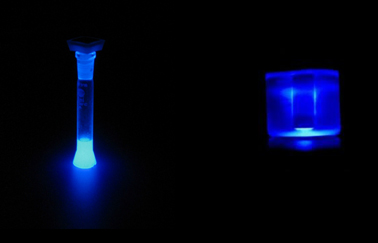
Some Information about luminol
IUPAC name: 5-amino-2,3-dihydro-1,4-phtalazinedione
Molar mass:
177,16 g/mol
Melting point:
319 – 320 °C
|
This material rate is 0 of 5 points from 0 votes.
|
(64)
|
Made by Romania, posted in Chemistry, on May 13, 2012 11:02 pm
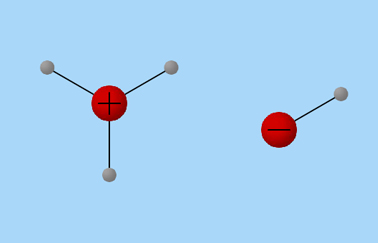
Definition: The molar heat of neutralizing represents the quantity of heat given up when a mole of a hydronium ion interacts with a mole of hydroxyl ion in a diluted solution.
|
This material rate is 1 of 5 points from 7 votes.
|
(90)
|