Made by  Turkey, posted in Chemistry, on March 19, 2013 2:39 am

An acidic solution is any aqueous solution which has a pH< 7.0 ([H+] > 1.0 x 10⁻⁷ M).
A basic solution is an aqueous solution containing more OH-ions than H+ions. An aqueous solution with a pH greater than 7.
|
This material rate is 0 of 5 points from 0 votes.
|

 (11)
(11)
|
Made by  Spain, posted in Chemistry, on August 14, 2012 10:47 pm
INTRUCTIONS ON HOW TO USE IT:
This Excel game is to be used as a sort of quiz game in Chemistry and Geology. The file contents two Excel sheets (bottom left of the screen), one for each subject. The user (student) will see several pictures related to these subjects, and in the box underneath he/she will write the word which describes the picture. If it is correct, it will be so announced with a green background. If not, it will be red and the user will be asked to try again.
|
This material rate is 0 of 5 points from 0 votes.
|
(34)
|
Made by  Italy, posted in Chemistry, on October 19, 2012 1:10 am

LEARNING OBJECTIVES
? to define a chemical change
? to recognize a chemical change and distinguish it from a physical one
? to read a chemical equation
? to write chemical equations
? to balance chemical equations
? to classify chemical reactions
? to write formation and combustion reactions for given compounds.
? to recognize the limitant reactant
? to make stoichiometric calculations:
from mass to moles, from moles to mass,
yield, masses needed for complete reactions (from a given quantity of a reactant)
|
This material rate is 6 of 5 points from 1 votes.
|
(50)
|
Made by  Romania, posted in Chemistry, on May 13, 2012 11:02 pm
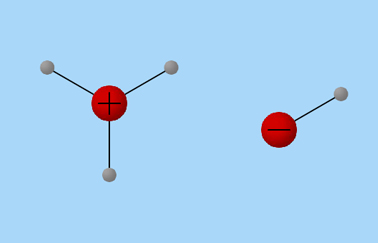
Definition: The molar heat of neutralizing represents the quantity of heat given up when a mole of a hydronium ion interacts with a mole of hydroxyl ion in a diluted solution.
|
This material rate is 1 of 5 points from 7 votes.
|
(67)
|
Made by  Bulgaria, posted in Chemistry, on May 14, 2012 1:09 am
AIMS:
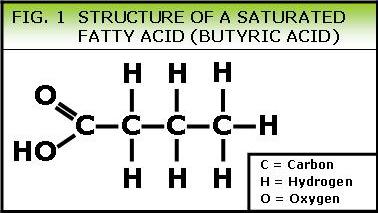
To revise and extend students’ knowledge of butyric carbohydrates
To systemize students’ knowledge of butyric carbohydrates
To put into practice the acquired knowledge of the structure, isomerism and chemical properties of the butyric carbohydrates
To illustrate the connection between the carbohydrates by means of chemical reactions
To develop students’ thinking and imagination by means of different logical operations- synthesis, analysis, comparison, analogy
|
This material rate is 0.1 of 5 points from 12 votes.
|
(85)
|
Made by Turkey, posted in Chemistry, on May 13, 2012 11:15 pm
Lesson Objectives
1. To be able to write the name of the ionic compound the formula of which is given.
2. To be able to write formula of the ionic compound the name of which is given.
3. To be able to write the name of the covalent compound the formula of which is given.
4. To be able to write the formula of the covanlent compound the name of which is given.
5. To use ICT as a successful tool when learning.
|
This material rate is 0.1 of 5 points from 7 votes.
|
(89)
|